Garden Landscapes: Recycling and Sustainability Commitment
 At Garden Landscapes, sustainability is not an add-on ??? it is central to how we design, build and maintain outdoor spaces. Our garden landscaping teams prioritise circular approaches to materials and waste, aiming to cut landfill and conserve resources across every project. We work with local borough recycling schemes and adapt to each area's specific waste separation rules, from separate green-waste collections to mixed-recycling streams.
We set a clear recycling percentage target to drive continuous improvement: our current objective is to achieve a 75% recycling and reuse rate of all site-derived materials by 2028, rising to 85% by 2032. These targets cover green arisings, soils, stone, timber and packaging. They are monitored quarterly and reported internally so every project manager and operative knows the expectation.
 Our approach aligns with local authorities: many boroughs operate color-coded waste separation systems for food, green, paper/card and residual waste; we train crews to segregate on-site accordingly. We also make use of local transfer stations for efficient onward movement of recyclable loads ??? shortening haul routes and reducing carbon impact from transport.
Garden landscape services benefit from specific material streams. For example, compostable green waste is often taken to municipal composting facilities at nearby transfer stations, while broken paving, brick and concrete can be crushed and reused as sub-base. We maintain clear on-site sorting areas and use labelled skips to make sure soil, turf, timber, plastics and metal are captured where possible.
Our partnerships with local charities are a vital part of the circular model. Usable topsoil, healthy plants and surplus paving are offered to community gardens and housing association projects. We have standing agreements with non-profit groups to collect plant stock and pots, ensuring materials that still have value are diverted from recycling channels and put straight back into community use.
 In addition to material reuse and charitable redistribution, we maintain strict reporting on diverted tonnage. Project close-outs include a waste and reuse log that records quantities sent to transfer stations, recycled, donated or sent for recovery. This data informs improvements and supports our move to ever-higher recycling goals.
Low-carbon transport is another pillar of our sustainability plan. Our fleet increasingly comprises hybrid and fully electric vans for local garden landscaping work, and we plan staged replacement of diesel vehicles as low-emission models become available. The result is fewer emissions per site visit and immediate local air-quality benefits in the boroughs where we operate.
Where electric vehicles cannot yet meet range or payload needs, we deploy low-emission diesel-electric hybrids and route-match jobs to reduce mileage. Deliveries and waste collections are consolidated so fewer trips are needed. We also prioritise transfer stations closer to project locations to keep haul distances short and emissions low.
To be clear, our recycling and sustainability programme addresses several material categories with tailored solutions:
- Green waste: composting and municipal green bins;
- Soils and turf: reuse on-site or screened and remediated for community reuse;
- Hard landscaping materials: crushing and reuse of concrete, bricks and stone;
- Timber: repair, reuse or wood recycling;
- Containers and pots: redistribution to charities or cleaned for reuse;
- Packaging and mixed recycling: segregated to match borough collection systems.
We also invest in staff training so operatives understand the local boroughs' approach to waste separation ??? some boroughs favour separate food-waste schemes while others bundle organics with green waste, and collection points vary. This local awareness ensures we present sorted loads that meet transfer stations' acceptance criteria, maximising recycling yield and minimising contamination.
Our charity partnerships go beyond material donation. We collaborate on community planting days, providing trained landscape teams and low-carbon transport to support public green-space projects. These collaborations strengthen neighbourhood resilience, reduce material handling steps and prolong the life of plants and soil that might otherwise be discarded.

Measuring Success and Future Commitments
Measurement is central to credibility. We publish internal progress dashboards that track diversion rates from landfill, charity donations, and transport emissions from our fleet. By 2028 we aim to cut site transport emissions by at least 40% per project compared with 2022 baselines through vehicle upgrades and smarter logistics.
Practical Steps You Can Expect from Our Garden Landscaping Teams
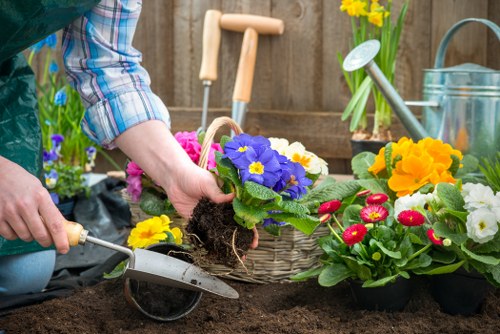
When we work on your plot, expect the following practical measures: sorted skips and clear labelling, minimised single-use plastics on-site, reuse first mentality for materials like stone and timber, and an offer to donate usable plants or soil to local charities. We keep the process transparent and aligned with local council waste practices so that materials are handled correctly once they leave site.
In summary, Garden Landscapes is committed to a practical, measurable and community-focused sustainability strategy. Through ambitious recycling percentage targets, smart use of local transfer stations, meaningful charity partnerships and a transition to low-carbon vans, we aim to make every garden project an opportunity to reduce waste, lower emissions and support local green initiatives. Strong collaboration with borough councils and community groups ensures our work meets both environmental goals and local needs.